Scrophulariaceae family
Features:
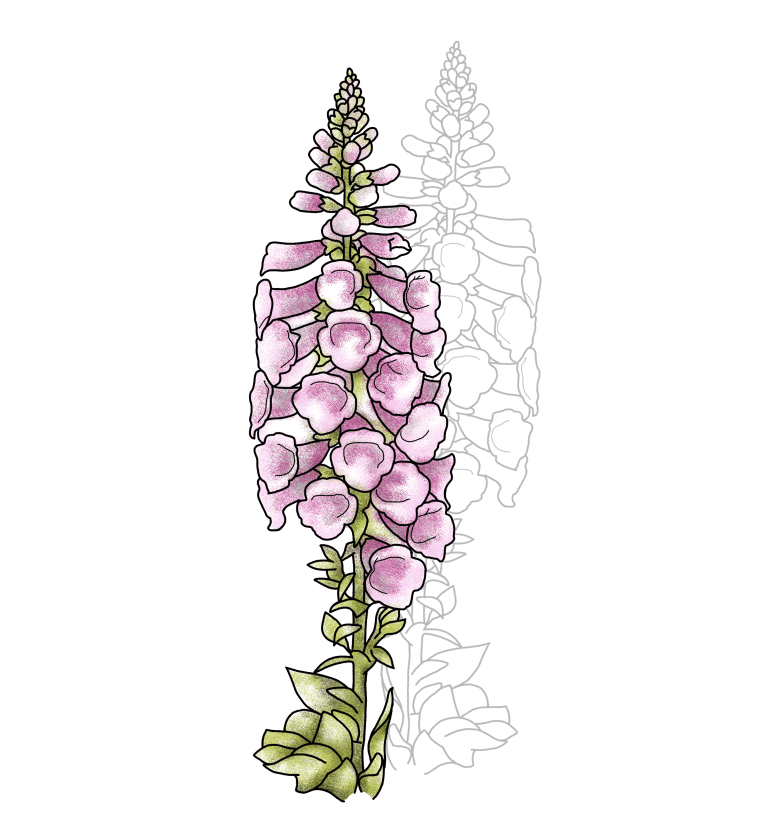
- It is a biennial, possibly perennial plant, that produces a basal rosette of 15–20 leaves in the first year of its development.
- The basal leaves are oval, lanceolate, with serrated edges. Their surface is rugose due to the prominent venation, and the petioles are long and winged.
- In the second year of its development, the flower spike appears. It is simple (seldom branched) and up to 170 cm long. The leaves on the stem are alternately arranged and are much narrower than the basal leaves.
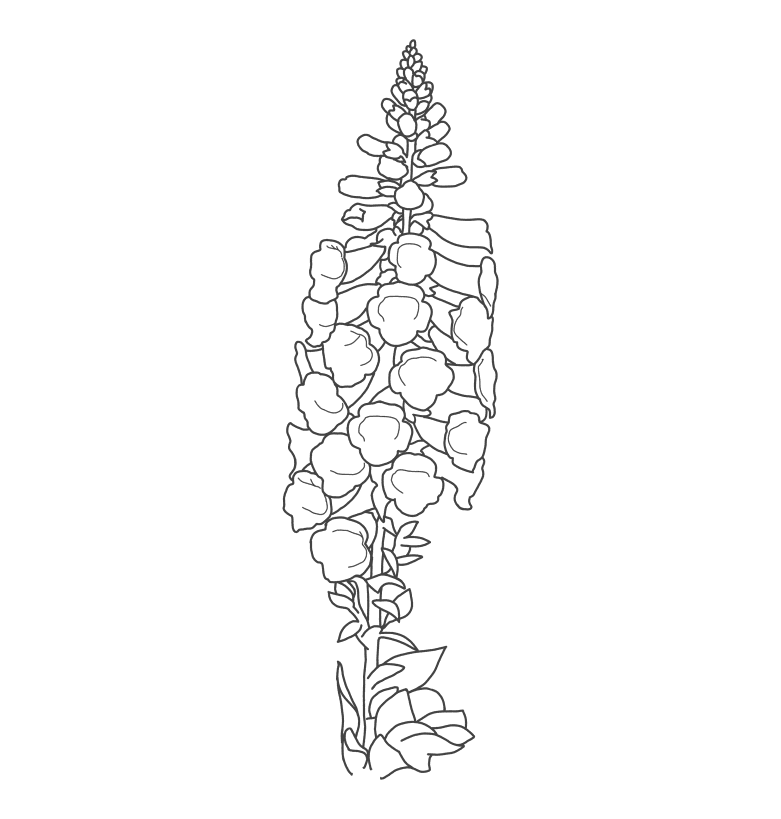
- The flowers form long, terminal, and one-sided racemes, 3-40 cm long, pendulous, and bell-shaped. The corolla is bright red, sometimes pink or white, with purple spots.
Habitat:This plant doesn’t grow uncultivated in our region. It is grown as a medicinal herb, and less frequently as an ornamental plant.
Medicinal use:
Digitoxin extracted from dried leaves of the plant, is administered in medicine to treat heart failure. This plant also contains a steroid called digoxigenin, used as a marker (mainly for nucleic acid labelling) in molecular biology research. Externally, it is used in preparations for treating wounds and strengthening veins.
Warning:
The plant should not be used as a home remedy, as it is highly poisonous.
Curiosities:
Its yellow-flowered varieties are also found in nature. These include endemic species (specific to certain regions), whose collection could threaten the species with extinction.