Witch-hazel family (Hamamelidaceae)
Features:
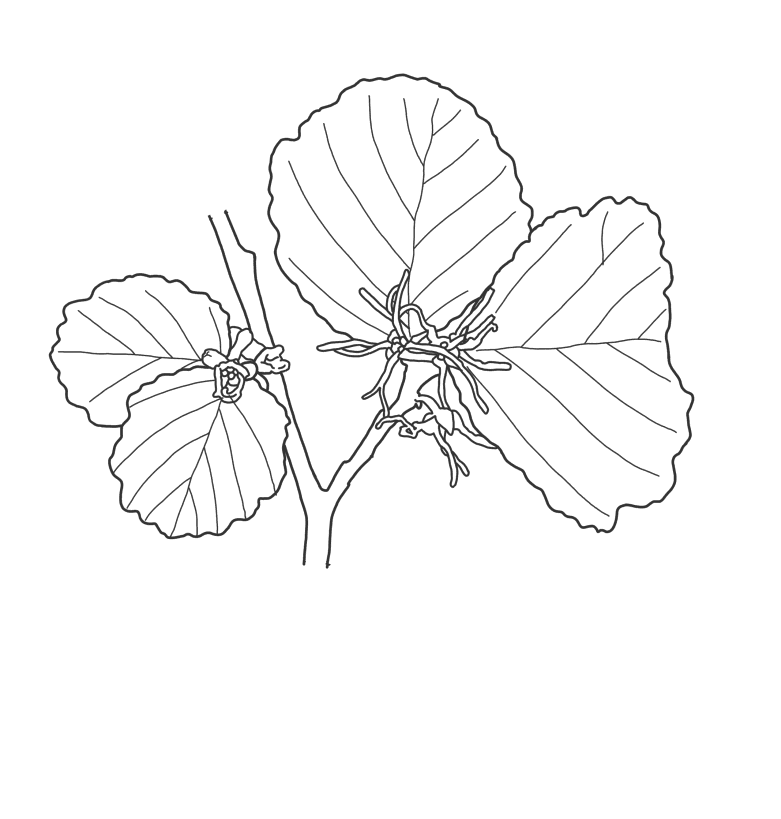
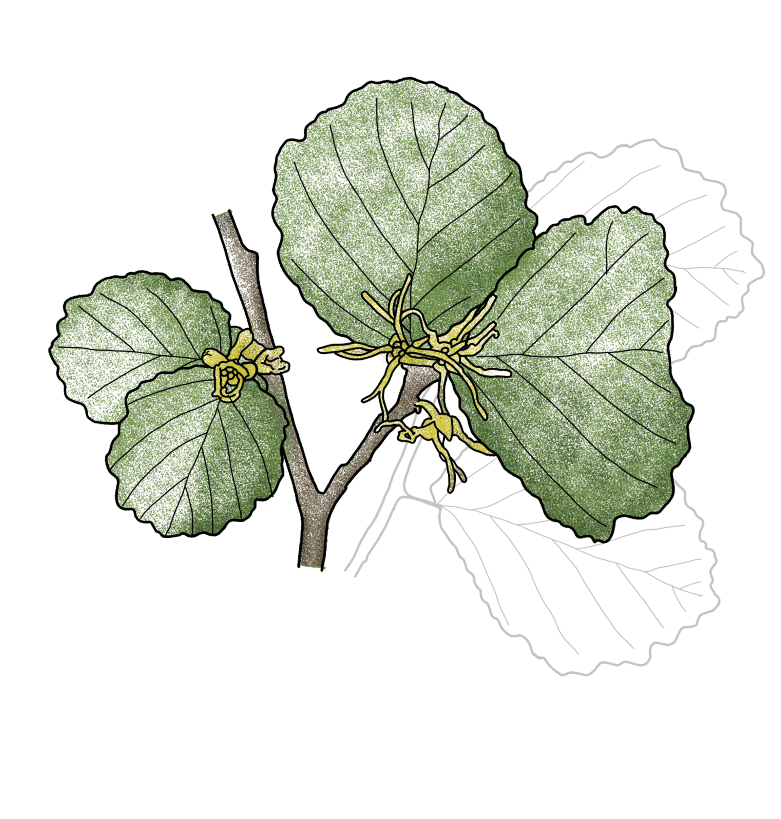
- Its clusters of bright yellow flowers open in winter.
- Its oval leaves are densely toothed.
- Its fruits are protected in a light brown, woody capsule, which after reaching maturity, they open and the winged seeds fly away.
Habitat: moist woodlands where it can grow up to 5 m tall as a tree or shrub.
Medicinal use:
Witch hazel is used primarily as a base for ointments. Having anti-inflammatory properties is often present in unguents for eczema and dermatitis. However, clinical studies have also shown it to be effective for hemorrhoids, sunburns, and in case of bruises, and skin injuries. Witch hazel or witch-hazel-based medicinal products, are efficient for the following problems: varicose veins, vasculitis, haemorrhoids, and lower limb vasoconstriction.
Domestic use:
The tea made from this plant is efficient against diarrhea, and a poultice made from a teaspoonful or two of the dried leaves brings relief in case of minor injuries. It is good to relieve circulatory problems and heal wounds.
Curiosities:
As this medicinal herb is native to North America, it has been planted only as an ornamental plant in our country. The experts of the University of Medicine and Pharmacy in Târgu-Mureș (Romania), led by Károly Csedő M.D., Ph.D., researched its replacement with native European hazelnut (Corylus avellana) leaves.