Buttercup family (Ranunculaceae)
Features:
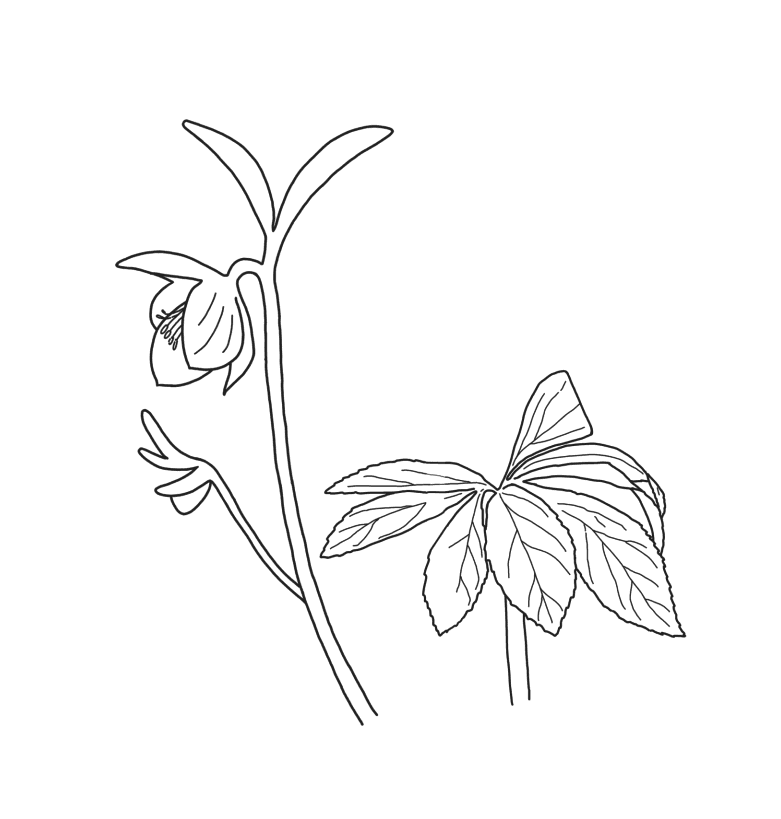
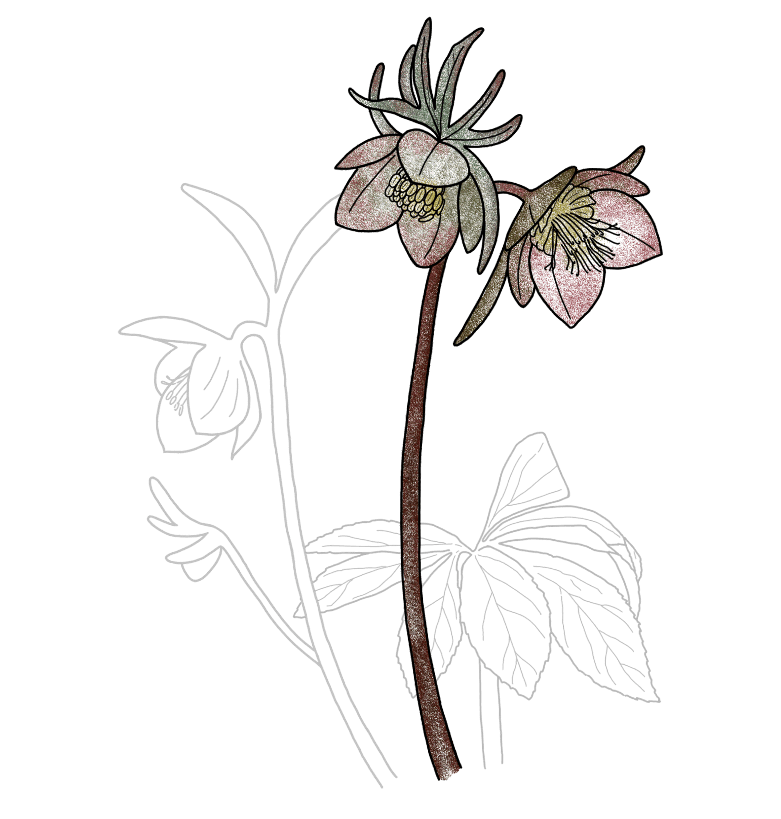
- It is a perennial plant with a dark brown rhizome from which large, palmate-lobed leaves develop.
- The bracts of the greenish flowers are purplish, purplish-red outside. It blooms in early spring.
- Its leaves have long petioles and are palmate and lobed. The segments of the leaves are lanceolate, with serrated margins.
- The peduncle grows in spring, having a terminal flower of 6–8 cm in diameter. The bracts are five petal-like sepals. Their outer surface is greenish-purple and violet-purple. The petals are turned into nectar. Its flowers have many stamens, and the area of pistils consists of 3-6 carpels fused at their base.
Habitat: It grows in scrublands and forests.
Medicinal use:
They collect the rhizomes (Hellebore radix) in March, April, or September. It contains cardiotonic glycosides with bufadienolide structure and saponins with a highly stimulating effect. In human medicine, it is the base material of a topical analgesic for injection administered as microinfiltration treatments.
Indications:
Articular pain (arthralgia), muscle pain (myalgia), nerve pain (neuralgia). Relieving abnormal stiffness and persistent contraction of skeletal muscles in the painful area, the plant may indirectly improve local circulation and reduce joint stiffness (ankylosis).
Curiosities:
The rhizome extract was the base material of a standardized medicinal product (an industrially manufactured medicine).