Hypericaceae family
Features:
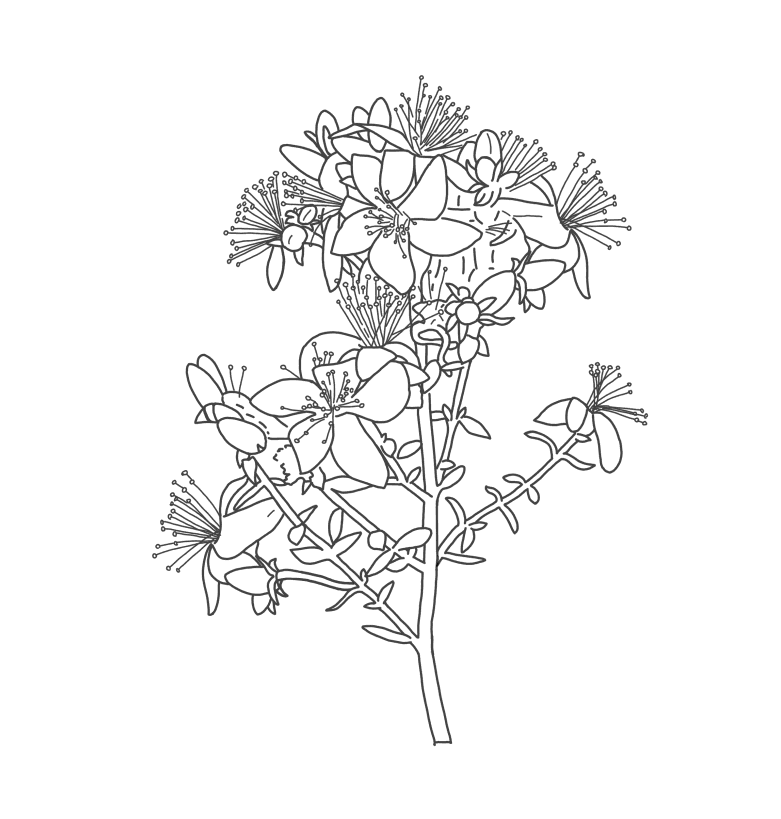
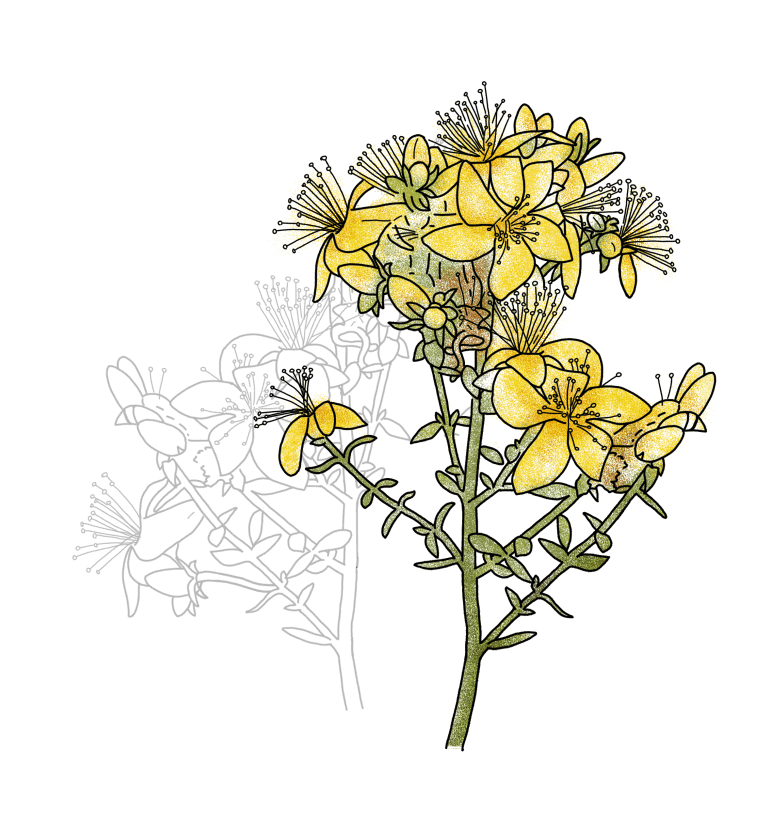
- It is a 30-90 cm high, woody-stalked plant.
- On its leaves held up towards the light, translucent spots can be seen, which appear to be holes, but which are actually containers of volatile oils, with black glandular dots on the edge.
- The flowers are bright yellow, consisting of five oval petals and numerous stamens.
- Its distinctive feature is a red sap, which appears when rubbing the leaves and flowers, due to a colouring matter called hypericin accumulated in the glandular dots. That is why the flower extract is also red.
- It has many black or dark brown seeds, 1 mm long, cylindrical, pointed at both ends, and slightly rough.
Habitat: It is a herb abundantly growing in dry grasslands and fallows, a common native plant of the Carpathian Basin.
Medicinal use:
The active substances of St. John’s wort are as follows: hypericin derivatives, flavonoids, flavone glycosides (hyperoside, rutin), biflavonoids, tannins, a few essential oils, phenol carboxylic acids, xanthones, phloroglucinol derivatives, and naphthodiantrons (hypericin).
Its plant extract has proven efficacy in treating depression. Its oily essence is efficient for severe burns and gastric and duodenal ulcers.
Domestic use:
The flowering shoots of common St. John’s wort are used to make tea and oil, to alleviate restlessness, nervous complaints, sleep disturbances, and mood. St. John’s wort oil extracts are applied to treat dermatitis, wounds, and burns.
Its tea protects the mucous membranes; in tea mixtures, helps for liver and gall bladder disorders, but, in appropriate dosage, it can also be used for treating varicose veins and hemorrhoids.
Curiosities:
It was considered an effective “exorcist” in the Middle Ages because of its antidepressant, mood-enhancing, mild sedative, and insomnia-fighting effects.
Warning:
Products administered internally can generate severe side effects when taken with other medications (sedatives, antidepressants).
St. John’s wort can be applied externally or internally. However, it is advisable to be careful with its dosage and seek expert advice on its regular use, because the hypericin content of its colouring matter makes the skin sensitive to light and may cause itching and dermatitis, if taken in large quantities.