Liliaceae family
Features:
- It is a perennial plant with a horizontal, cylindrical, and branched rhizome.
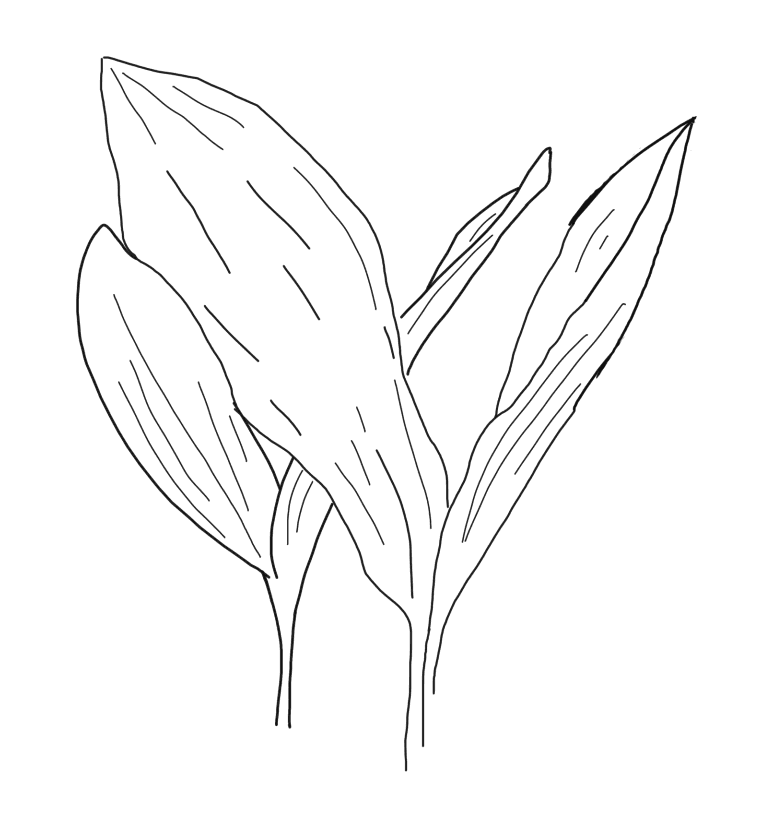
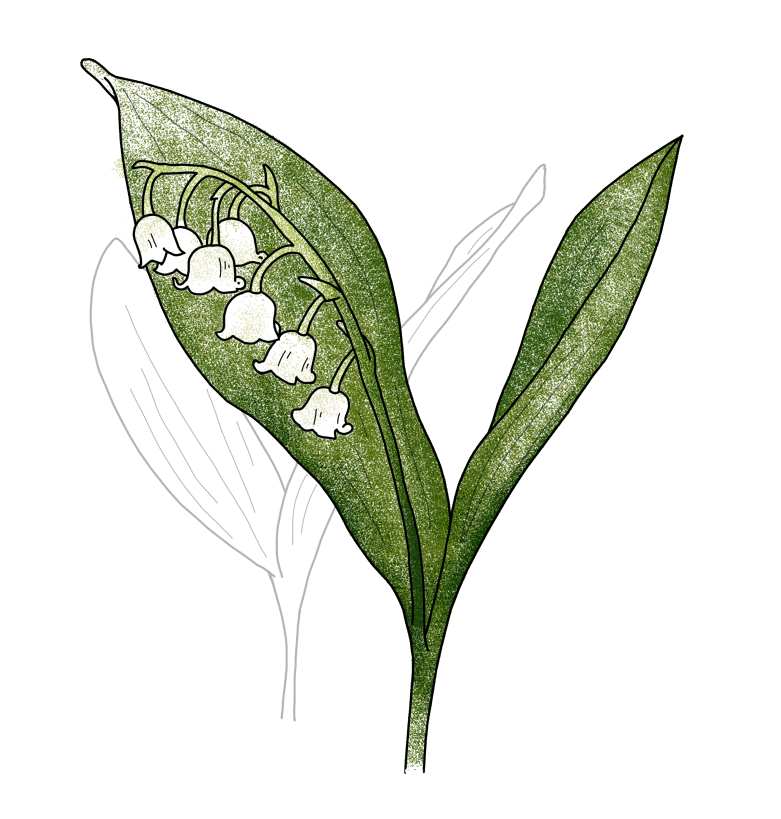
- The leaves are 10–20 cm long, 5–6 cm wide, and elliptic, with almost parallel nerves.
- The flowers form clusters at the apex of the peduncle. They are white, fragrant, roundish-bell-shaped, and pendant. Its fruits are red berries about 1 cm in diameter, with 3–6 seeds.
- Mainly the leaf (Convallariae folium) and occasionally the whole aboveground part or the rhizome is utilized. The leaves are collected when the plant is flowering and dried at 105 °C.
Habitat:Native to temperate regions of Europe and Asia, it occurs mainly in oak woods but in our deciduous forests groves, too, and wherever the soil is moist. It will even tolerate calcareous soils if planted in shady places, and if the soil does not dry out quickly. It is a popular herbaceous perennial flower and medicinal herb often grown in gardens.
Medicinal use:
It contains cardenolide-type, cardiotonic glycosides of sterol structure. In some countries, it is an ingredient in factory medicinal products. When taken orally, their effects are more rapid than those of drugs made from foxglove (Digitalis lanata), but are of shorter duration. Its industrial formulations are useful during breaks in digitalis treatment or in patients who tolerate the treatment poorly. Its drug is in its leaves (Convallariae folium) processed by the pharmaceutical industry. Its cardiac glycosides (convallatoxin) and saponins cause irregular and slow pulse, abdominal pain, and diarrhoea. Ingestion in moderate quantities leads to death. It is used externally for articular complaints, and its other substances are heart medications.
Warning:
It is a very poisonous plant, often mistaken for bear’s garlic. In case of symptoms of poisoning, contact a doctor for advice.
Curiosities:
The lily of the valley was a symbolic plant of Yugoslavia and was declared the national flower of Finland in 1967.