Daisy family (Asteraceae)
Features:
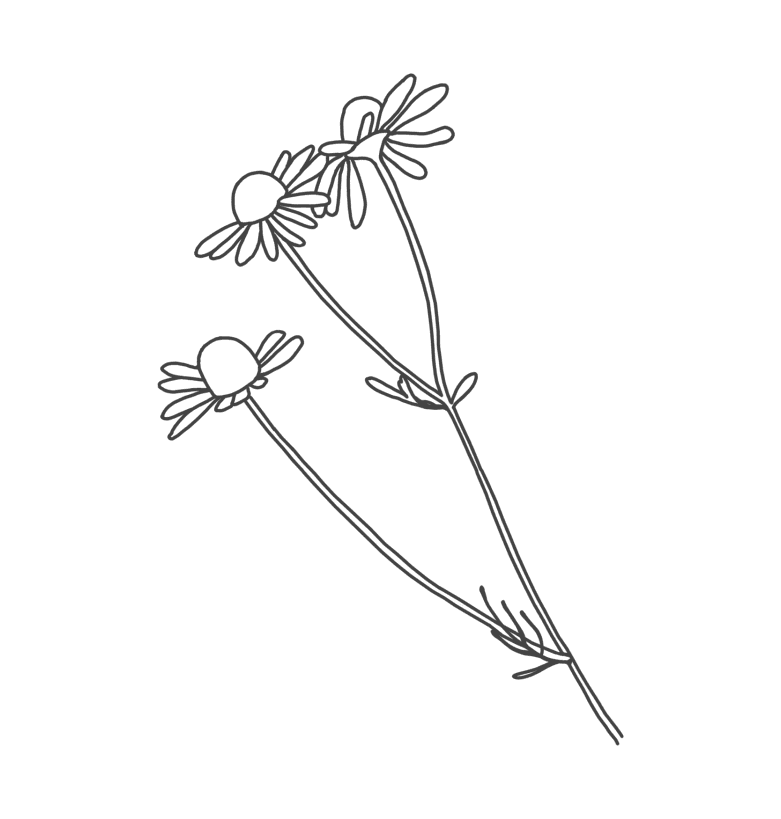
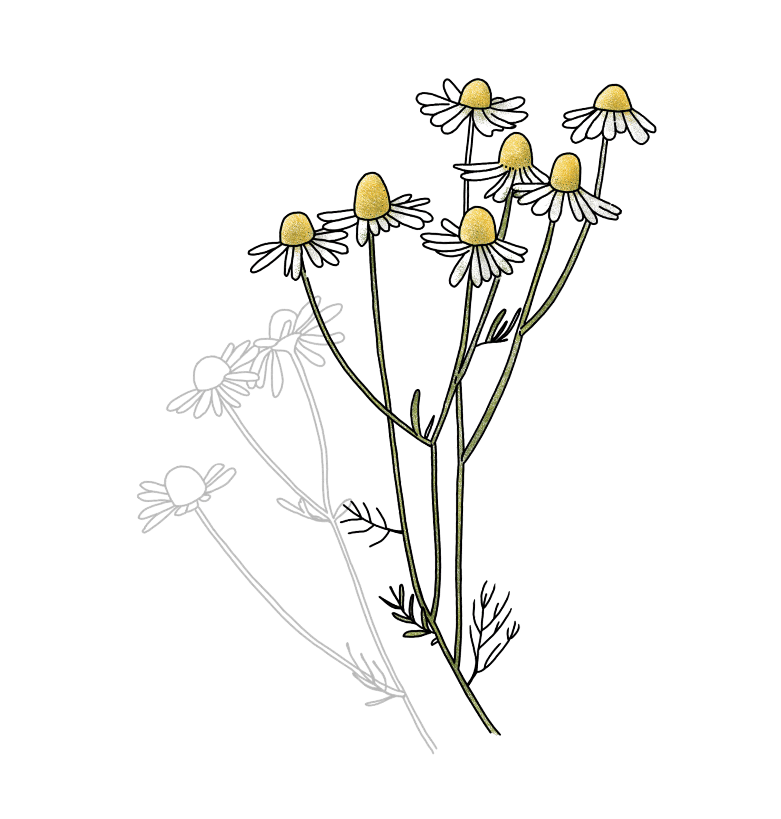
- It is an annual or overwintering plant, variable in height depending on environmental factors. Stems of wild chamomile are often only 5–10 cm long, but the cultivated specimens can reach 50–80 cm.
- Its leaves are cleft in 2 or 3, sharp fringes.
- The flower heads are 10-25 mm wide, and the receptacle at flowering is elongated, hollow, conical, and formed of ray flowers.
- The flowers are of two types: 1. 12-18 white and ligulate ray flowers, not longer than 1 cm. 2. hundreds of internal, small, tubular, golden florets.
Habitat: Its origin lies in the area around the eastern basin of the Mediterranean Sea. In the temperate zone, it is widespread throughout the world. Sometimes, in our area, it grows massively on the fields, particularly on saline soils, sometimes also in clayey, sandy places. It is also common in yards and pastures, next to fences and houses.
Medicinal use:
We can divide the active substances of chamomile inflorescences into two groups according to their physical properties: 1. volatile substances and 2. non-volatile substances, the so-called extracts. Internally, they are used to treat gastrointestinal diseases and menstrual disorders, and externally, as ointments, poultices, baths, and inhalations, to soothe inflammations of the skin and mucous membranes, including the oral cavity and respiratory tract, as well as the anal and genital area.
Domestic use:
Its decoction has excellent anti-inflammatory properties. In the case of gingivitis and pharyngitis, it is effective for gargling and as an eye poultice. It can be given as a tea against intestinal spasms and bloating, even to infants. Its tea is drunk plain or mixed with other herbs for intestinal and bladder inflammations, and in case of colds.
Curiosities:
The ancient Greeks already used it successfully to cure women’s diseases. The Latin name of the plant refers to this: matrix = mother.
A plant called yarrow (milfoil) can be used instead of this medicinal herb, but in this case, it is worth measuring the amount of the active substance. The specialists from Târgu-Mureș, Romania (Gábor Rácz, Erzsébet Rácz-Kotilla) obtained significant result in the research of the yarrow.